Key takeaways
- Town engineering notes put house services under at least 1.6 m of cover, so most freezing happens inside the house.
- Crawlspaces, outside walls, attached garages and hose bibs are the four places to check before January arrives.
- On nights below minus 20, open cabinets on outside walls and keep a thin stream running from a cold tap.
How cold a winter here gets
January averages minus 7.4 degrees at the nearest climate station, with a mean low of minus 11.1. The station counts 74 days a year when the high stays at or below freezing, and about 7.2 nights a year colder than minus 20.
Those deep nights do the damage. A pipe that copes with a week of light frost can freeze in a few hours once the air drops that far and the wind finds a gap in the wall.
Why the buried line is rarely the problem
The Town's engineering notes call for at least 1.6 m of cover over a house service and put the top of the watermain at least 1.7 m below the road. At that depth, frost rarely reaches the pipe.
What freezes instead is the short run after the service comes through the foundation wall, plus every branch that heads toward a cold corner of the house.
The four spots that freeze first
Check these places before the first deep cold:
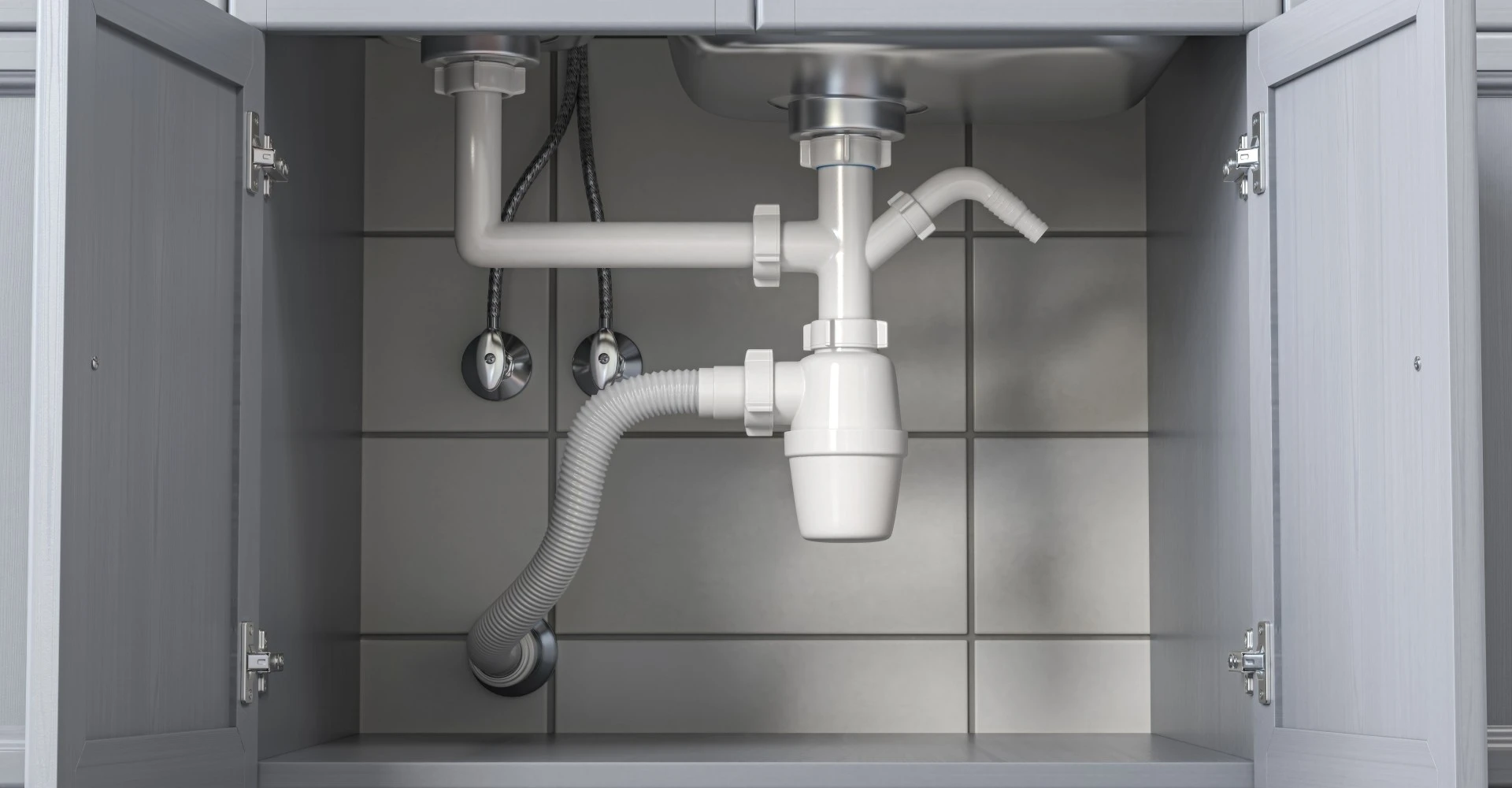
- Crawlspaces, where pipes hang close to vents and a cold dirt or concrete floor.
- Outside walls, above all the kitchen and bathroom lines in a wall facing the wind or over a thinly insulated rim joist.
- Attached garages, where a supply to a laundry tub or a bathroom above runs through unheated space.
- Hose bibs, where water left in the pipe behind the tap freezes and splits it inside the wall.
Simple fixes before the cold arrives
Shut the indoor valve that feeds every hose bib, let the outdoor faucet drain, and leave it open until spring. Put foam sleeves on exposed pipe in the crawlspace and garage, and seal gaps where cold air gets in around the rim joist.
On a night forecast below minus 20, open cabinet doors on outside walls and let a cold tap run a thin stream. If you leave home for a few days, keep the heat on rather than turning it right down.
If a pipe has already frozen
Shut the main valve first if you see a bulge, frost on the pipe or a drip. Open the tap the line feeds so melting water can escape, then warm the pipe gently, working back from the tap. Never use a torch. Cracks often show only once water is moving again, so watch the pipe as pressure returns. Plumbing East Gwillimbury can thaw the line, replace a cracked section and suggest insulation or a new route for the spot that froze.
Related services
Frozen Pipe Repair
Need Frozen Pipe Repair in East Gwillimbury? Plumbing East Gwillimbury repairs split lines and verifies pressure and flow. Schedule service.
Pipe Repair
Need Pipe Repair in East Gwillimbury? Plumbing East Gwillimbury repairs supply and drain piping and confirms it is tight. Schedule service.
Leaky Pipes
Need Leaky Pipes in East Gwillimbury? Plumbing East Gwillimbury handles the work cleanly and verifies everything is working right. Book today.
Plumbing Maintenance
Need Plumbing Maintenance in East Gwillimbury? Plumbing East Gwillimbury maintains your system to catch issues early. Book maintenance.
FAQ