Key takeaways
- Test the sump pump before the snow melts, because water reaches the pit fast while the ground below is still frozen.
- Clear the outside end of the discharge pipe and aim it at your own yard, as Town by-law 2018-083 asks.
- A battery backup covers the freezing rain outages that often come with the thaw, so test it on the same day.
Why the thaw is the hard week for a sump pit
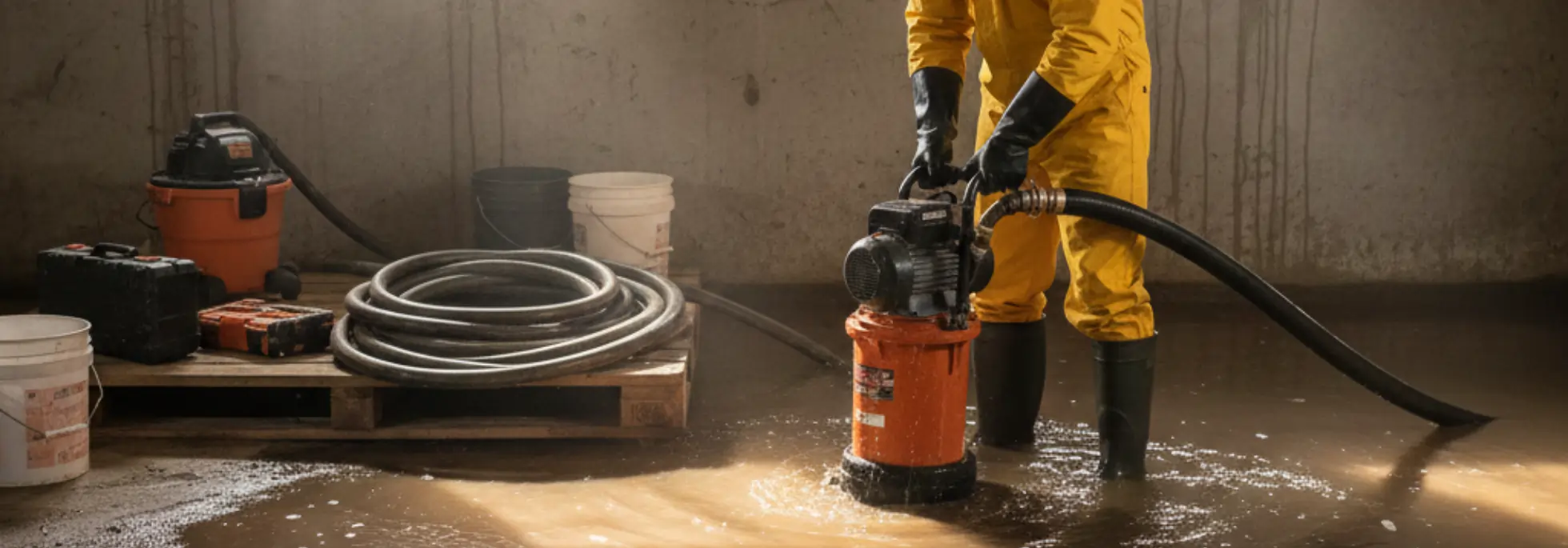
In a thaw the snow on the lawn melts while the ground below is still hard, so the water runs along the foundation to the weeping tile instead of soaking in. A pump that barely ran since fall can suddenly cycle every few minutes.
April 2026 showed how fast water can pile up. About 150 mm of rain fell in a month that usually sees around 75 mm, and the conservation authority issued a shoreline hazard watch for Lake Simcoe.
The pail test, one step at a time
Open the pit and pick out any gravel, silt or cord tangled near the float. Tip in a pail of water and watch the float climb until the motor kicks in. The pit should drain within seconds and the pump should shut off cleanly.
Listen as it stops. A soft thump from the check valve means the water in the pipe is being held. A long gurgle back into the pit means the valve is worn and the pump keeps lifting the same water.
Follow the discharge to where it ends
Walk outside and find the end of the pipe. By late winter snow or ice often blocks it, and a blocked line can burn out the motor. Clear it before the melt begins.
Under Town by-law 2018-083, roof runoff, storm water and sump water have to be led off from the foundation and kept on your property until they soak in or flows to a storm sewer, swale or watercourse. Point the outlet at a stretch of yard that slopes away, never toward the neighbour.
A battery backup for the ice storm days
Freezing rain falls on about 3.7 days a year at the nearest climate station. Ice brings down branches and wires, and the power can go out just as the thaw fills the pit. A main pump with no hydro is only a weight in the water.
The backup pump is mounted higher than the main one and starts when the level keeps climbing. Test it the same day by unplugging the main pump and pouring in a second pail.
Signs the pump needs a visit
Call if the motor hums but moves no water, keeps running with the pit empty, or trips the breaker. Rust on the pipe joints and a float that sticks halfway up are warnings as well. Plumbing East Gwillimbury can test both pumps, change a tired check valve and reroute an outlet that drains back toward the house, and we put the price on paper first.
Related services
Sump Pumps
Need Sump Pumps in East Gwillimbury? Plumbing East Gwillimbury handles sump pumps end to end with tested results. Schedule service.
Backup Sump Pump Installation
Need Backup Sump Pump Installation in East Gwillimbury? Plumbing East Gwillimbury adds a tested backup system to protect your basement. Schedule installation.
Flood Prevention Services
Need Flood Prevention Services in East Gwillimbury? Plumbing East Gwillimbury upgrades pumps and valves to help protect your home. Book an assessment.
FAQ