Key takeaways
- Kitec went into Ontario houses for roughly a dozen years from 1995 by general practice, and its brass fittings are the weak point.
- The 2021 census puts about 2,045 local homes in building periods that overlap those years, with Mount Albert's late 1990s streets among them.
- Check at the water heater, under the sinks and along the cold line, then photograph any crusted or damp fittings.
What Kitec is and why its dates matter
Kitec is a layered pipe, plastic around a thin aluminium core, with the hot lines usually orange and the cold ones blue. In general Ontario practice, builders fitted it from roughly 1995 until 2007. Trouble tends to start at the brass fittings, which corrode from the inside, crust over and in time leak or let go.
Those dates are a rule of thumb from the trade, not a record of any one builder. A house from 2008 may hold leftover stock, and a 1996 house may have none.
How many local homes date from those years
The 2021 census sorts homes by building period rather than by year, so its numbers only frame the window. Of the 11,450 occupied homes it counted in town, 980 went up between 1991 and 2000, then 445 between 2001 and 2005, and 620 between 2006 and 2010.
That makes about 2,045 houses, close to 18 per cent, in periods that overlap the Kitec years. Some were built before 1995 or after 2007, and many got copper or PEX instead.
Mount Albert and its late 1990s streets
Mount Albert is the one community with census figures of its own. Out of about 1,925 sampled dwellings, its population centre counted 345 built in the 1991 to 2000 period, then 180 and 245 in the two five-year periods that follow. The village grew north-west in the late 1990s, and one subdivision there began in 1995.
Houses on those streets sit squarely in the Kitec window, so a look at the brass under the sinks takes a few minutes well spent.
Finding it in your own basement
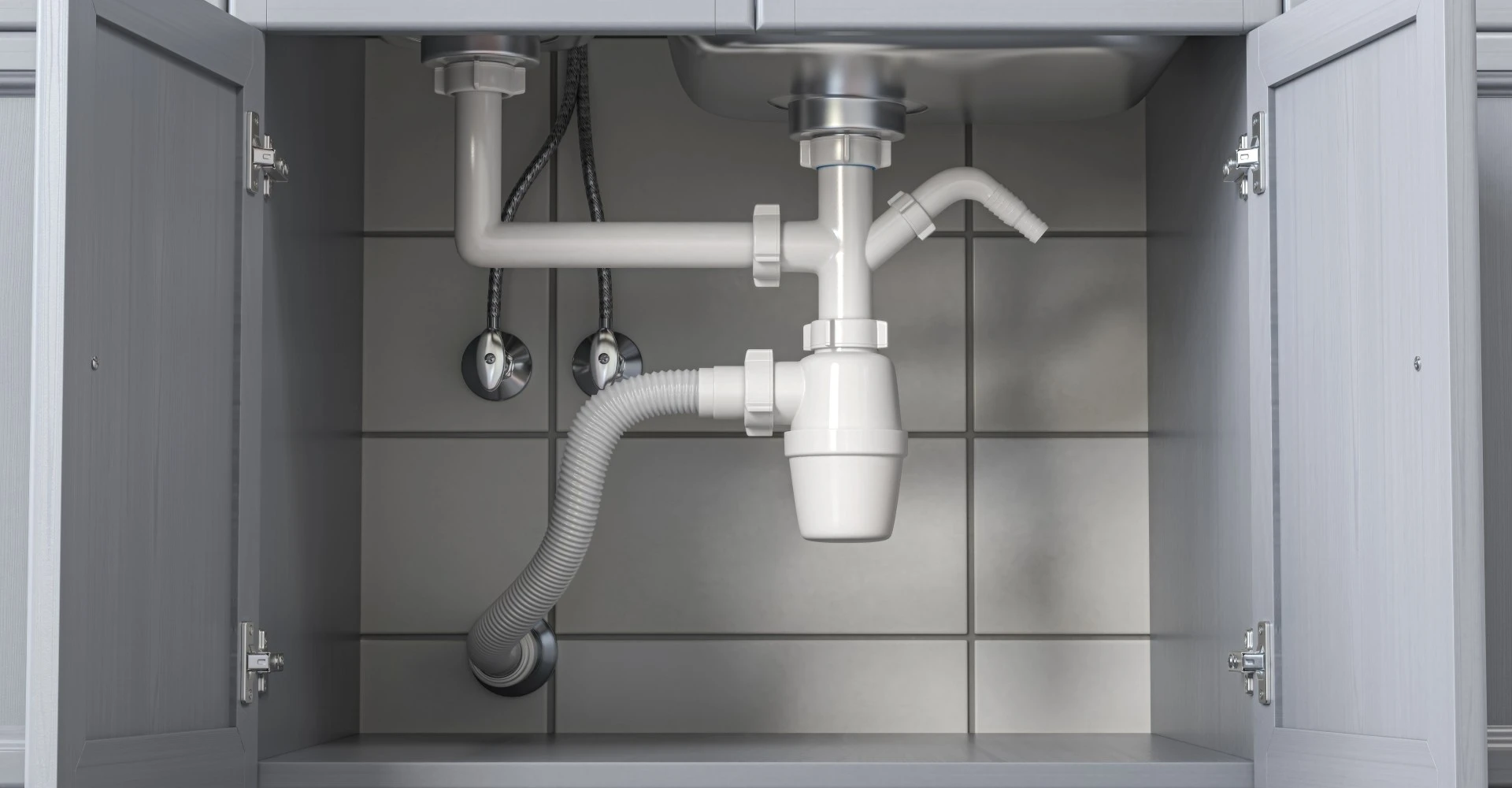
Start at the water heater, where the supply lines leave the top of the tank. Then follow the cold line back toward the meter or pressure tank, and look under the kitchen and bathroom sinks. Kitec is easy to spot by colour, and the brand name is usually printed along the pipe.
Look closely at each brass fitting. A white or greenish crust, a damp ring or a drip at a joint means that fitting is already wearing. Photograph anything you find before you call.
How a replacement is usually planned
Replacing the whole system is the usual advice, since the same brass fittings sit at every joint. Plumbing East Gwillimbury maps each Kitec run first, then plans new PEX or copper routes through basement ceilings and closets. You see the route and a written quote before any drywall is cut. Every new line gets a pressure test before the walls close up again.
Related services
Kitec Plumbing Replacement
Need Kitec Plumbing Replacement in East Gwillimbury? Plumbing East Gwillimbury replaces Kitec lines and verifies tight, reliable service. Request a quote.
Repiping
Need Repiping in East Gwillimbury? Plumbing East Gwillimbury upgrades old piping and confirms everything holds under pressure. Schedule a quote.
Plumbing Home Inspection
Need Plumbing Home Inspection in East Gwillimbury? Plumbing East Gwillimbury inspects plumbing and explains what needs attention. Book an inspection.
FAQ